মন খারাপ
mon kharap
The state when the mind and heart are "bad" or not well — a heaviness, a low mood, a dimming of the inner self.
What the dictionary holds
Moner Kotha (মনের কথা) is a community-led platform for building a global mental health dictionary. It is not a clinical service, a therapy app, or a symptom checker. It is a living collection of perspectives — words, objects, images, stories, and signed expressions — contributed by people across languages and cultures.
344
published concepts
reviewed dictionary records
8
platform languages
6 represented in entries
9
stories
from contributors
6
contribution formats
word · signed · object · image · story · feeling
Co-development and governance
New terms are not published automatically and no live language model writes definitions. Simplification and translation may assist reviewers, but publication requires accountable human review against the source record.
1
Submitted
2
Linguistic review
3
Clinical review
4
Lived-experience review
5
Published
Membership, lived-experience representation, affiliations and conflicts of interest will be published with decisions.
Every published entry is reviewed at least every 24 months, or sooner after a substantiated safety or evidence report.
Forward translation, independent back-translation and cognitive interviewing are recorded before a translation is labelled validated.
Public changelog
Current edition: 332 Bangladesh field-lexicon families, 42 families added and 54 deepened in the latest source review. Evidence links are restricted to Researcher mode and support future correction histories.
Entry media will be published only when the script, translation, consent and cultural framing have completed the same review workflow as the written entry. No synthetic lived-experience story will be presented as testimony.
60–90 sec
Scripted from reviewed entry evidence
Visual
Alt text and low-bandwidth still included
Context
Corrects shortcuts without diagnosing
Consented
Contributor controls attribution and withdrawal
Interoperability
These prototype exports demonstrate the public contract without claiming a production API. A deployed service would add versioned endpoints, authentication, rate limits, stable canonical URLs and FHIR validation.
A draft terminology resource for validation with health-system partners.
Download FHIR JSONA proposed embed contract for partner sites; production hosting is still required.
Each entry is one contributor's perspective — not a fixed definition. Meanings change across regions, generations, and contexts.
mon kharap
The state when the mind and heart are "bad" or not well — a heaviness, a low mood, a dimming of the inner self.
pagol
Often translated as "mad" or "crazy" in English dictionaries, but পাগল carries a whole spectrum of meaning.
tar chhenra
Literally "wire torn" or "string snapped".
Patterns emerging from early contributions — held tentatively, not as conclusions.
পাগল (pagol) means "mad" in Bengali — but also the holy fool, the passionate lover, the creative outsider. Loco in Spanish can be a term of endearment. مجنون is the sacred poet-fool of Arabic love poetry. Stigma and celebration share a single word across cultures.
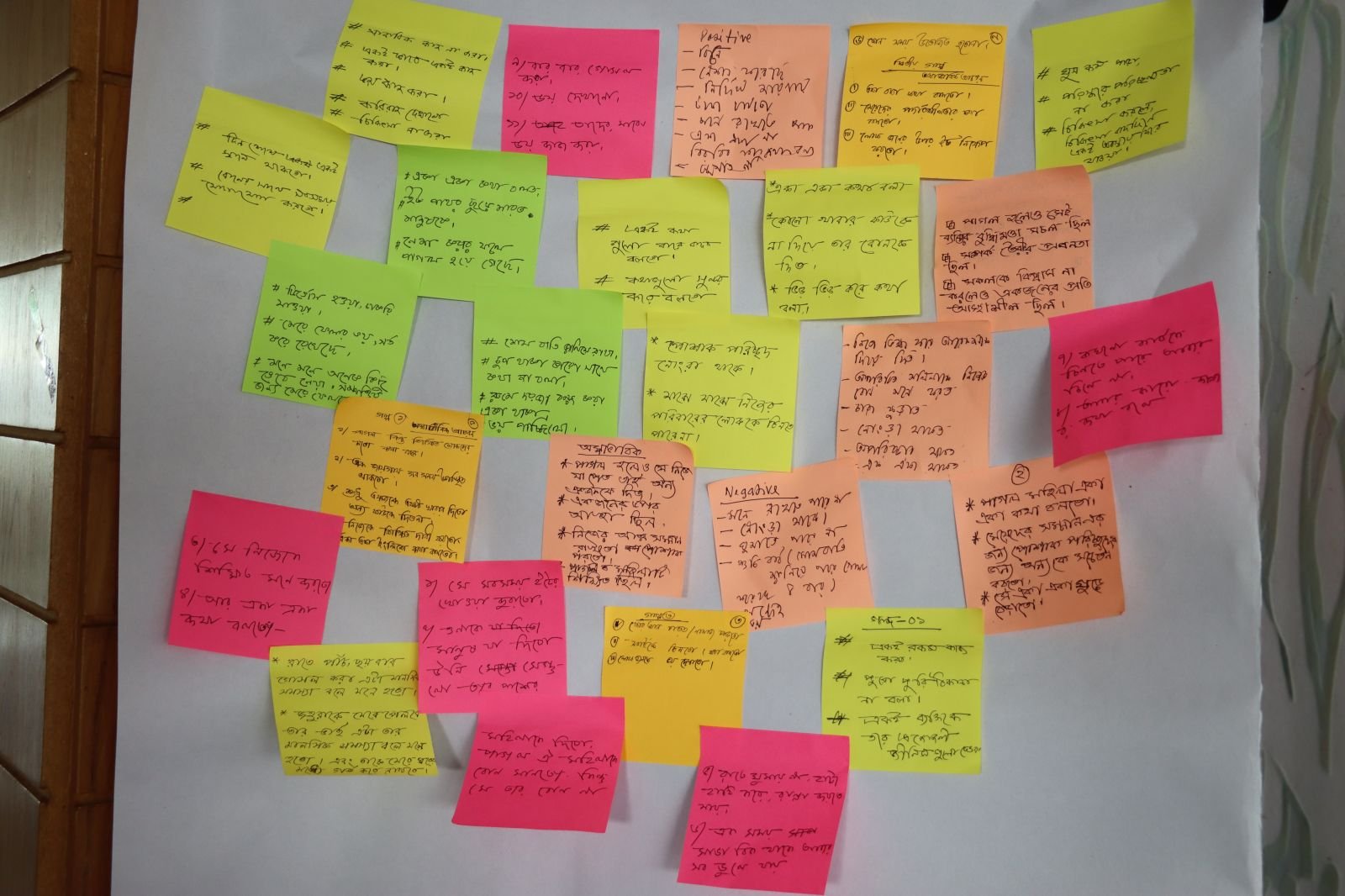
A stone on the chest. A frayed thread. An empty chair. Contributors across cultures offer objects as expressions of distress that no clinical term quite captures. "No connection to mental health in my context" is also a valid and valued response.
মন খারাপ for ordinary sadness. তার ছেঁড়া — a string snapping — for crisis. بھاری دل (a heavy heart) in Urdu. These are not lesser alternatives to clinical terms. They are different, finer-grained observations about human experience.
Contributors consistently note that their expressions lose something important when translated into clinical language. This platform treats the original expression as primary. Translations are always labelled as approximations, not equivalents.
Signed expressions for distress are not word-for-word equivalents of spoken language. Facial expression, movement, and spatial grammar carry meaning that cannot be captured in text. We are building ways to receive and represent them honestly.
Who uses a word matters. When it is used matters. In some communities, an expression is common; in others, it is taboo. The dictionary holds contradictions side by side without resolving them.
Personal journeys in contributors' own words and languages.
English · UK (diaspora, Bangladeshi origin)
Growing up in Dhaka, I never heard the word "depression." My grandmother had a whole vocabulary — মন খারাপ for the ordinary, তার ছেঁড়া for crisis, বাতাস লাগা for something that came from outside and unsettled you. It was only when I moved to London and tried to explain to a therapist what I was feeling that I realised how much had been lost in translation...
Spanish · Mexico City
Cuando digo que tengo nervios, no hablo de lo mismo que dice el psiquiatra cuando habla de "trastorno de ansiedad generalizada." Los nervios que siento vienen de mi familia, de la pobreza, de no saber si voy a poder pagar la renta. Los nervios son mi respuesta a un mundo que no está bien — no una disfunción de mi cerebro...
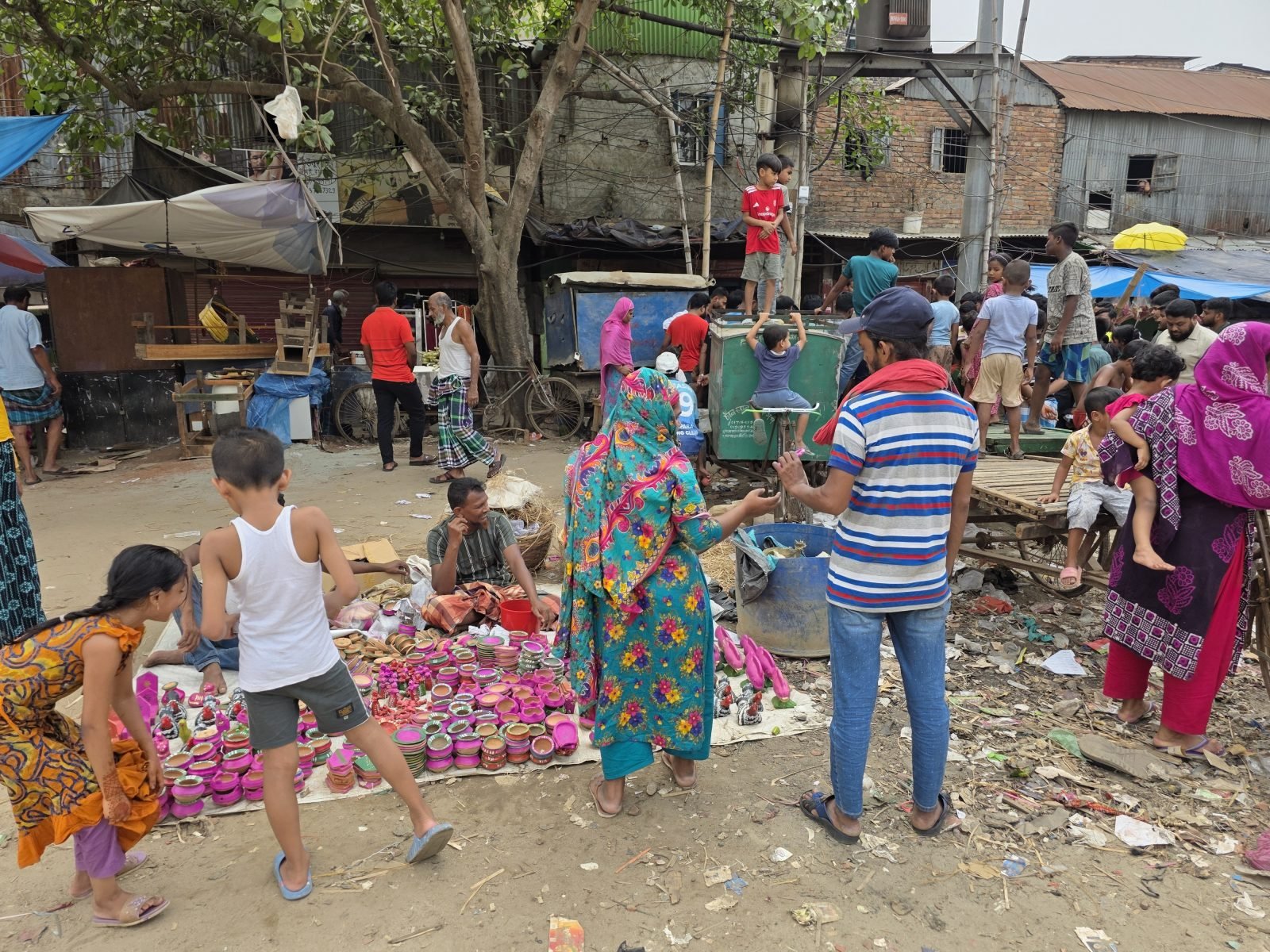
Visual expressions from contributors — covering pain and barriers, crisis and uncertainty, and personal achievements. All photos include author explanations and content notes.
Open the gallery →A community-led, multilingual platform for building a global mental health dictionary — collecting how people understand, express, and experience mental health across languages, cultures, ages, and communication styles.
Contributions may be words, signed expressions, objects, images, stories, or feelings. Short or long. Any language. No diagnosis required.
Two user types: general contributors and researchers. Research consent is always separate from community participation.
Select phrases to share with a group or contributor. You decide what each means.
Click a phrase to copy it. These are not an assessment scale.
AI Language Companion
Optional tool · Not a therapist · Not a chatbot
The AI Language Companion is an optional language tool. It can help with:
This tool will never:
Demo notice
This is a prototype. No content is sent to an external AI service — responses are illustrative demos. A production version would retrieve only from the human-reviewed Moner Kotha corpus, require explicit per-session consent, and send every proposed simplification or translation through human review before publication.
All AI outputs are labelled as suggestions. The tool cannot create live dictionary definitions. Your original expression is always preserved, and no generated wording is published without editorial review.
Type below and press Enter or Send
Press Enter to send · Shift+Enter for new line · All outputs require your review before use